





Blog
-
 Read more ...
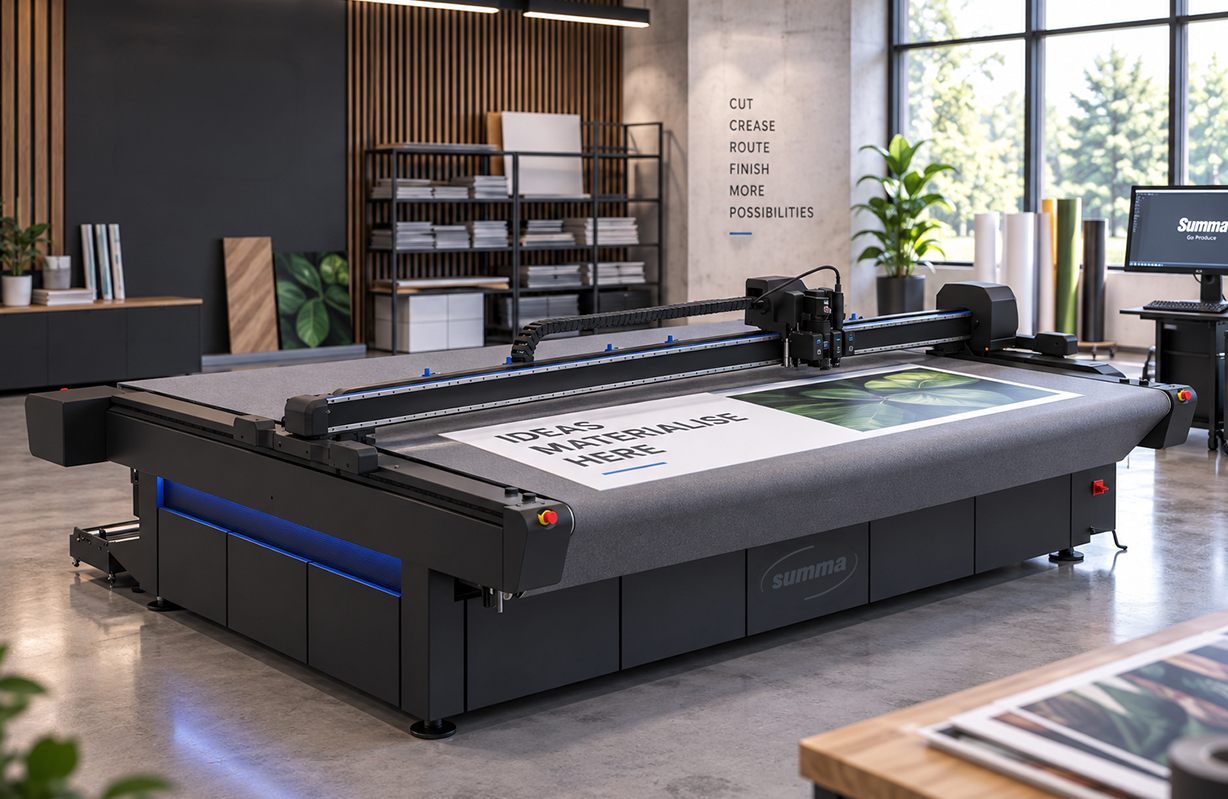
Summa today announces the expansion of its F Series Vantage platform into large-format production environments with the introduction of the F1832, F3220 and F3232. Designed for high-volume signage, packaging, textile, and industrial applications, the new models extend the philosophy behind the F Series Vantage: delivering productivity gains across the entire workflow. Alongside the new large-format models, Summa also introduces the F1625CF, a dedicated configuration optimised for dry carbon fiber cutting.
Built for production reality
Modern production facilities face increasing pressure from a number of angles, ranging from shorter lead times to labor shortages requiring more automation and easier-to-onboard workflows. “Businesses are not short of ambition; they are short of capacity”, says Geert Pierloot, Managing Director at Summa. The F Series Vantage was developed to remove the constraints that limit that ambition.
Under the hood, the Vantage platform delivers superior performance, with 200 N vertical and horizontal cutting force, a 5 HP / 3.7 kW router running at up to 60,000 RPM and acceleration up to 1G, further aided by high jerk value, resulting in full speed cutting over short movements. “But production is no longer defined by speed alone”, says Stijn Henderickx, CEO of Summa. “What matters is how quickly you can move from one completed job to the next. The F Series Vantage combines unseen automation, operator-friendly interfaces and an optimized tool library to take human error out of the equation, offering productivity gains of 40% and more, from sign shops to industrial floors.”
Automation, empowering your workflow
Unlike closed automation ecosystems that force customers into proprietary workflows, the F Series Vantage embraces a modular and open approach. Powered by Summa’s GoConnect software, the platform features a universal API architecture that allows customers to integrate the automation technologies that best fit their business. Whether connecting a simple foot pedal, robotic loading system, vision technology, or advanced production machinery, customers retain complete freedom to design and evolve their workflow.
Additional automation capabilities include:
- Front, rear and 50/50 extension table configurations
- Standard included Operator Mode and Tandem Mode for continuous production
- MiriSys-powered nesting optimisation
- Barcode-driven workflow automation
- Heavy Duty Roll Support (HDRS) capable of handling rolls up to 200 kg / 441 lb
Engineered for years of production
Beneath the surface, the new F Series Vantage platform has been engineered as a true industrial production solution. The machine's rigid steel chassis provides the stability required for demanding applications, while long-life beam and carriage components deliver both durability and dynamic performance.
Next to that, the new platform architecture focuses heavily on serviceability. Improved accessibility enables faster maintenance interventions and simplifies everything from routine service tasks to component replacement, helping customers maximise uptime throughout the machine's lifecycle.
The smart balance between cutting speed and routing power
The F Series Vantage offers one of the industry’s broadest tool libraries, from kiss-cutting precision tools to the strongest router in flatbed cutting. Summa’s philosophy is clear: everything that can be cut, should be cut.
Geert Pierloot: “Cutting delivers higher throughput, cleaner edges, and lower operational costs. Only when materials demand it should operators step up to routing. This approach enables customers to consistently achieve the optimal balance between speed, quality, and productivity.”
Designed for operators, not specialists
As labour shortages continue to impact production businesses worldwide, ease of operation has become as important as machine capability. Rather than introducing additional complexity, Summa focused on reducing the operator learning curve. From the easy-to-learn GoProduce operator software to automations like Automatic Device Calibration (ADC), automated tool & module recognition and the ultrasonic media thickness sensor, the F Series Vantage is packed with technologies to get new users productive in as little as one hour.
Fastest path to ROI
Combining industrial performance, open automation, streamlined operation, long-term durability and an attractive price tag, the F Series Vantage delivers an exceptionally attractive return on investment.
By reducing setup time, minimising operator dependency, accelerating changeovers, and increasing productive uptime, the platform helps customers realise value faster than traditional finishing solutions. Whether producing packaging, signage, displays, textiles, composites, or industrial components, the F Series Vantage is designed to help businesses move more work through their operation with greater confidence and efficiency.
Four new models
F1832 — Long-format cutting in a single feed
Built for single-sheet production. Full 5 × 10 ft (1,525 × 3,050 mm) boards and complete ACM plates run in one uninterrupted pass, matching print output up to 72 in (1,840 mm).F3220 — Soft signage production with steady control
Built for textiles. A rotary module twice as fast as the previous generation changes what wide-format textile cutting looks like, with the Heavy Duty Roll Support enabling wrinkle-free workflows.F3232 — Unlimited versatility for large-format production
Built for double-sheet production. The tandem workflow makes full use of two rows of vacuum zones, and the new router opens up the range of materials that can be cut in a genuine production workflow.F1625 CF — Shielded for the most demanding industrial cutting
The F1625 CF is the answer for dry carbon fiber cutting, avoiding short-circuits caused by conductive dust, by integrating coated circuit boards, an electrical cabinet held under negative pressure so air flows out rather than in, and shielded connectors on the module heads.
About Summa
Summa is a global leader in digital cutting solutions, delivering innovative technology for signage, packaging, textiles, and industrial applications. Our product portfolio includes state-of-the-art vinyl, flatbed, and laser cutters that ensure exceptional precision and quality. Summa is headquartered in Gistel, Belgium, with regional offices in USA and Italy. Leveraging more than 50 years of experience, we continue to pioneer cutting-edge technology that redefines precision cutting.
-
 Read more ...
PSW has expanded its professional print portfolio following its appointment as an authorised Canon UK reseller for the latest Canon ImagePROGRAF photography and fine art printer range. The appointment enables PSW to supply Canon's newest ImagePROGRAF GP and PRO Series printers to photographers, artists, print studios and creative professionals across the UK, further strengthening the company's offering in the professional large format print market.
The range now available from PSW includes:
Canon ImagePROGRAF GP Series
- ImagePROGRAF GP-2600S
- ImagePROGRAF GP-4600S
- ImagePROGRAF GP-6600S
Designed for high-quality graphics, photography and poster production, the GP Series combines an expanded colour gamut with excellent colour consistency, making it well suited to vibrant retail graphics, premium posters and professional photographic output.
Canon ImagePROGRAF PRO Series
- ImagePROGRAF PRO-2600
- ImagePROGRAF PRO-4600
- ImagePROGRAF PRO-6600
Developed for professional photographers and fine art producers, the PRO Series delivers exceptional image quality, precise colour reproduction and smooth tonal gradation, helping users produce gallery-quality photographs and fine art prints with confidence.
As one of a select number of specialist Canon UK partners offering the latest ImagePROGRAF range, PSW is now able to provide customers with a complete Canon large format solution, backed by experienced technical advice, installation, media expertise and ongoing support.
"We're really pleased to be adding the latest Canon ImagePROGRAF range to our portfolio," said Tom Skinner, Sales Director at PSW.
"Canon has built a fantastic reputation in professional photography and fine art printing, and these new GP and PRO Series printers are a great fit for the markets we support. We've already had plenty of interest from customers looking to upgrade or invest in new equipment, so it's great to be able to offer them the latest technology backed by the service and support they're used to receiving from PSW.
"For us, it's about more than simply supplying a printer. We work with customers to understand what they're trying to achieve, recommend the right hardware, media and workflow, and then continue to support them long after installation. That's what sets PSW apart."
Alongside the new Canon printer range, PSW supplies a comprehensive selection of genuine inks, specialist media and workflow solutions, enabling customers to achieve the highest standards of print quality across photography, fine art and graphic production.
The addition of the Canon ImagePROGRAF GP and PRO Series reflects PSW's continued commitment to investing in market-leading technology and giving customers access to the best solutions available for professional print.
The Canon ImagePROGRAF GP-2600S, GP-4600S, GP-6600S, PRO-2600, PRO-4600 and PRO-6600 are available to order now from PSW.
For more information about the Canon ImagePROGRAF range, or to discuss your professional print requirements, contact the PSW sales team or visit www.psw.co.uk.
About PSW
Established for more than 35 years, PSW is one of the UK's leading suppliers of professional print technology, offering large format printers, finishing equipment, media, consumables and colour-managed workflow solutions. Working with many of the industry's leading manufacturers, PSW helps customers across the photography, graphics, signage, display and fine art sectors choose the right technology for their business, backed by expert advice, installation and ongoing technical support.
-
 Read more ...
For years, wide format print businesses could rely on a steady flow of banners, posters and exhibition graphics. While those products remain an important part of many print service providers' (PSPs) portfolios, they're no longer where the strongest margins are being made.
Competition has intensified, online pricing has squeezed profits, and customers increasingly expect premium quality with rapid turnaround. At the same time, advances in print technology have opened the door to applications that were once considered specialist or outsourced work.
The result is a noticeable shift across the industry.
Rather than chasing higher volumes of low-margin work, many PSPs are focusing on applications that deliver greater value, encourage repeat business and strengthen long-term customer relationships.
That shift is something PSW is seeing first-hand.
According to Tom Skinner, Sales Director at PSW, conversations with customers have changed noticeably over the past few years.
"We're seeing far more print businesses looking beyond traditional signage. Customers want to know where the next opportunities are and which applications will genuinely help them improve margins. The focus has shifted from simply replacing existing equipment to investing in technology that opens up new markets such as interior décor, retail graphics and vehicle wraps."
It's a trend reflected across the industry as more PSPs diversify their services and reduce their reliance on lower-margin commodity print.
Interior Décor Has Become a Mainstream Print Opportunity
Not long ago, printed wall coverings were considered a niche product. Today they're specified by architects, interior designers, retailers and corporate clients as part of everyday refurbishment projects.
Whether it's a boutique hotel creating a memorable guest experience, a healthcare provider refreshing waiting areas or a retailer designing an immersive shopping environment, customised wall graphics have become an established part of modern interiors.
Unlike traditional signage, these projects often involve consultation, material selection and bespoke production—all factors that help move the conversation away from price alone.
Demand continues to grow across:
- Hospitality
- Retail
- Corporate workplaces
- Healthcare
- Education
- Residential interiors
For PSPs, that's good news. Interior décor projects typically command stronger margins and frequently lead to repeat business as organisations refurbish additional locations or roll out branding across multiple sites.
For businesses looking to enter this market, the HP Latex 630 Series provides an accessible route into premium décor applications, including white ink capabilities, without requiring a large production footprint. Larger operations producing higher volumes often look towards the HP Latex 730 and HP Latex 830 Series to support increased productivity while maintaining exceptional print quality.
Retail Graphics Are Becoming Faster—and More Local
Retail graphics have always been a reliable source of work, but the way they're produced has changed dramatically.
National campaigns are now commonly adapted for individual stores, local promotions or limited-time events. Window graphics may only remain in place for a few weeks before being replaced by the next campaign.
Retail customers are also demanding greater flexibility. Campaigns are becoming shorter, more localised and more responsive to seasonal trends, meaning print providers need production workflows that can keep pace without sacrificing quality.
That increasing demand for flexibility is something many PSPs are experiencing, particularly those working with retail groups, franchises and marketing agencies where multiple versions of the same campaign are often required.
Typical projects include:
- Window graphics
- Seasonal promotions
- Point-of-sale displays
- Promotional branding
- Store refreshes
The ability to print, finish and prepare graphics for installation quickly has become a genuine competitive advantage, particularly for businesses producing retail graphics at volume.
Vehicle Wraps Continue to Offer Excellent Value
Vehicle graphics remain one of the most recognisable examples of wide format printing.
From independent tradespeople to national logistics companies, organisations continue to invest in vehicle branding because it provides continuous visibility long after installation.
For PSPs, vehicle wraps also represent one of the industry's highest-value applications. Colour consistency, durability and installation performance all influence customer satisfaction, particularly when branding needs to remain consistent across an entire fleet.
Although it's a mature market, demand remains steady across construction, facilities management, transport, utilities and local businesses.
For print companies already producing signage, vehicle graphics often provide a natural extension of existing services while increasing average order values and strengthening customer relationships.
Short-Run Printing Is Reshaping Customer Expectations
Large print runs still have their place, but they're no longer the default.
Brands increasingly want campaigns tailored to individual stores, specific regions or one-off events. Marketing teams value flexibility, allowing graphics to evolve throughout a campaign rather than committing to thousands of identical prints.
Projects increasingly include:
- Event branding
- Localised marketing campaigns
- Limited-edition promotions
- Personalised displays
- Pop-up retail graphics
Efficient digital workflows have become essential, allowing PSPs to move seamlessly between multiple short-run jobs without lengthy setup times or unnecessary waste.
For businesses serving agencies, retailers and brand owners, that flexibility has become a genuine competitive advantage.
Experience-Led Retail Is Creating New Opportunities
Retail design has evolved far beyond shelves and product displays.
Today's physical stores are carefully designed environments intended to encourage customers to spend more time in-store and build stronger connections with the brand.
Print plays a significant role in creating that experience.
Floor graphics, wall displays, illuminated graphics, directional signage and bespoke décor all contribute to a consistent visual identity while helping retailers refresh spaces quickly and cost-effectively.
These projects often combine several applications within a single installation, creating opportunities for repeat business while increasing the overall value of each project.
Versatile print technology allows PSPs to produce this broad mix of applications without relying on multiple specialist production systems.
Diversification Is About More Than New Products
Perhaps the biggest lesson from the past few years is that resilience matters.
Businesses relying heavily on one product category are often more exposed to pricing pressure and changing market conditions.
Those offering a broader range of services are generally better positioned to adapt as customer requirements evolve.
Diversification doesn't necessarily mean reinventing your business overnight. Often it starts by identifying additional opportunities within your existing customer base.
A retailer ordering window graphics today may also require wall coverings, floor graphics and point-of-sale displays tomorrow. An office refurbishment could lead to reception branding, meeting room graphics and interior décor across multiple locations.
The more applications a PSP can confidently produce, the greater the opportunity to become a trusted long-term partner rather than simply another print supplier.
Technology Is Supporting That Shift
Diversification isn't simply about adding new applications—it's about having the confidence to produce them efficiently and consistently.
According to Andrew Hand, Marketing Manager at PSW, customers are taking a much broader view when investing in new print technology.
"The conversations we're having today are much less about headline print speeds and much more about business capability. Customers want equipment that gives them the flexibility to produce a wider range of applications, improve workflow efficiency and support future growth. They're looking at the long-term opportunities rather than just today's workload."
That growing emphasis on versatility is one reason HP's Latex portfolio continues to attract interest from businesses looking to expand their offering.
The HP Latex 630 Series provides an accessible route into premium décor and white ink applications, while the HP Latex 730 and HP Latex 830 Series are designed for higher-volume production across multiple application types. Together, they give PSPs the flexibility to diversify without investing in multiple specialist systems.
Final Thoughts
The most successful print businesses in 2026 are unlikely to be those producing the greatest volume of work—they'll be the ones producing the greatest value.
Applications such as interior décor, retail graphics, vehicle wraps and customised print continue to demonstrate that customers are prepared to invest in quality, creativity and fast turnaround when the solution meets their needs.
For PSPs, diversification isn't about moving away from traditional signage. It's about broadening capabilities, creating new revenue opportunities and building stronger, longer-lasting customer relationships.
As customer expectations continue to evolve, investing in versatile print technology and developing expertise across a wider range of applications could prove to be one of the smartest long-term business decisions a print provider can make.
-
 Read more ...
HP has expanded its large format printing portfolio with the launch of the HP DesignJet Z6 and Z9+ PostScript Printer Series Plus Edition, designed to deliver improved image quality, workflow automation and higher productivity for print businesses.
The new series builds on a DesignJet platform that HP says has more than 40,000 units installed worldwide. Combining technologies from the previous Z6 and Z9 models, the latest printers are aimed at businesses producing professional photography, retail graphics, posters and technical drawings.
Targeting small and medium-sized print providers, the printers are designed for a broad range of users, including photo studios, copy shops, retailers, educational establishments and architectural practices looking to manage multiple applications from a single device.
According to HP, the new DesignJet range combines HP Pixel Control technology with HP Vivid Photo Inks to produce sharp detail, smooth colour gradients and water- and fade-resistant prints. The company also says its dual-drop technology delivers high-quality output without the need for additional light inks, helping to simplify the ink system while maintaining image quality.
The HP DesignJet Z9+ Plus Edition has been developed for colour-critical applications, including professional photography and premium graphics production. It features an embedded spectrophotometer for automatic colour calibration, while an optional HP Gloss Enhancer is available to improve gloss uniformity across printed output.
Alongside improvements in image quality, HP has introduced a range of features aimed at increasing production efficiency. The company says new print modes can increase output by up to 90% in certain production scenarios, while dual-roll capability, automatic roll switching and an integrated vertical trimmer on selected models are designed to reduce manual intervention and minimise finishing times.
In addition to the hardware upgrades, HP has strengthened the software ecosystem surrounding the new DesignJet range. Enhanced integration with the HP Click App and Driver is designed to simplify job submission and print preparation, enabling users to process files more efficiently and improve workflow across multiple print applications.
HP has also incorporated HP Wolf Pro Security into the new printer series, providing built-in protection against cyber threats and helping businesses safeguard connected devices, print jobs and sensitive business data as production environments become increasingly digital.
HP expands PrintOS Production Hub
Alongside the printer launch, HP has announced a series of enhancements to HP PrintOS Production Hub. The latest updates include a new Order Approval feature, allowing customers to review and approve jobs before production begins, helping to reduce errors and unnecessary reprints.
HP has also introduced an Orders API, enabling PrintOS Production Hub to integrate with CRM, ERP, MIS and accounting systems to automate order management across existing software platforms. Completing the update is a new AI Upscale Image feature, designed to improve the quality of lower-resolution artwork during file preparation and reduce the need for manual image enhancement before printing.
Commenting on the launch, Daniel Martinez, Senior Vice President and Division President of HP Large Format Printing, said:
"Print businesses today need to do more with less – faster turnaround, broader applications and consistent quality. The HP DesignJet Z6 and Z9+ PostScript Printer Series Plus Edition has been developed to deliver the precision, quality and productivity customers need to grow their businesses profitably."
The HP DesignJet Z6 and Z9+ PostScript Printer Series Plus Edition is expected to be available in the UK from early to mid-July 2026.
-
 Read more ...
For years, productivity in the print industry has largely been measured in square metres per hour. It's a simple metric and one that remains useful when comparing print speeds on paper. However, for many print service providers, it no longer reflects the reality of modern production environments.
The true cost of inefficiency rarely comes from a printer running too slowly. More often, it stems from workflow interruptions that create delays across the wider production process. A printer sitting idle while operators wait for files, a finishing department struggling to keep pace with output, or an installation schedule being pushed back because production missed a deadline can all have a significant impact on profitability.
While these disruptions may appear minor in isolation, they often create a chain reaction throughout the business. Lost production time affects labour utilisation, finishing capacity, dispatch schedules and customer delivery expectations. Over time, these small inefficiencies accumulate, reducing throughput and placing additional pressure on already stretched teams.
The Shift Towards Continuous Production
As customer expectations continue to evolve, print businesses are being asked to deliver more work, in less time, across a wider variety of applications. Short-run jobs, personalised campaigns, retail graphics, wall coverings and event materials are frequently moving through production simultaneously, often with increasingly demanding turnaround times.
In this environment, raw print speed is only part of the equation. The businesses gaining a competitive advantage are those that can maintain consistent workflow continuity, minimise interruptions and move jobs efficiently from pre-press through to finishing and installation.
This shift in priorities is one of the reasons why the latest HP Latex printer range has gained significant attention across the market. Rather than focusing solely on production speed, the HP Latex 630, HP Latex 730 and HP Latex 830 Series are designed to support different levels of workflow demand while helping businesses maintain predictable output and operational efficiency.
The HP Latex 630 and 630W are particularly suited to smaller or growing print providers looking to expand into higher-value applications such as wall coverings, retail graphics and white ink production. For businesses managing increasing workloads, the HP Latex 730 and 730W offer a balance of productivity, consistency and versatility across a broad range of commercial print applications. At the higher-volume end of the market, the HP Latex 830 and 830W are designed for production environments where uptime, throughput and workflow continuity are critical to maintaining profitability.
Although each platform serves a different segment of the market, the underlying objective remains the same: reducing production friction and keeping jobs moving efficiently through the business.
Why Finishing Efficiency Matters Just as Much as Print Speed
One area that is often overlooked when assessing production performance is the time required between printing and finishing. In many print environments, bottlenecks occur not during printing itself, but in the period that follows when jobs are waiting to be laminated, trimmed, packed or prepared for installation.
The ability to move work directly into finishing can have a significant impact on overall productivity. Faster progression through the workflow means improved labour utilisation, fewer production delays and greater capacity to handle urgent or last-minute work without disrupting existing schedules.
For print service providers operating in sectors such as retail graphics, events and promotional campaigns, these efficiencies can make the difference between meeting tight deadlines and missing valuable opportunities.
Building Capacity Through Better Workflow
As workloads become increasingly diverse and less predictable, operational flexibility is becoming one of the most valuable assets a print business can develop. The challenge is no longer simply producing more output; it is managing a wider mix of applications while maintaining consistency, quality and profitability.
Whether handling short-run promotional campaigns, regionalised marketing materials, seasonal retail rollouts or bespoke customer projects, businesses need production systems that support efficient workflow management rather than adding complexity.
This is where workflow-focused print technology is creating measurable business value. By reducing interruptions, improving production continuity and enabling more predictable job scheduling, modern print systems help businesses increase capacity without proportionally increasing labour requirements or operational risk.
The Future of Competitive Advantage in Print
The next phase of competition in wide-format printing is unlikely to be defined by which machine offers the highest headline speed. Instead, success will increasingly depend on a company's ability to maintain reliable throughput, reduce operational bottlenecks and respond quickly to changing customer demands.
For forward-thinking print service providers, workflow efficiency is no longer simply a production consideration. It has become a strategic business decision that influences profitability, scalability and long-term growth.
As a result, the HP Latex 630, 730 and 830 Series are increasingly being evaluated not just on print performance alone, but on how effectively they support the wider workflow requirements of modern print production.
-
 Read more ...
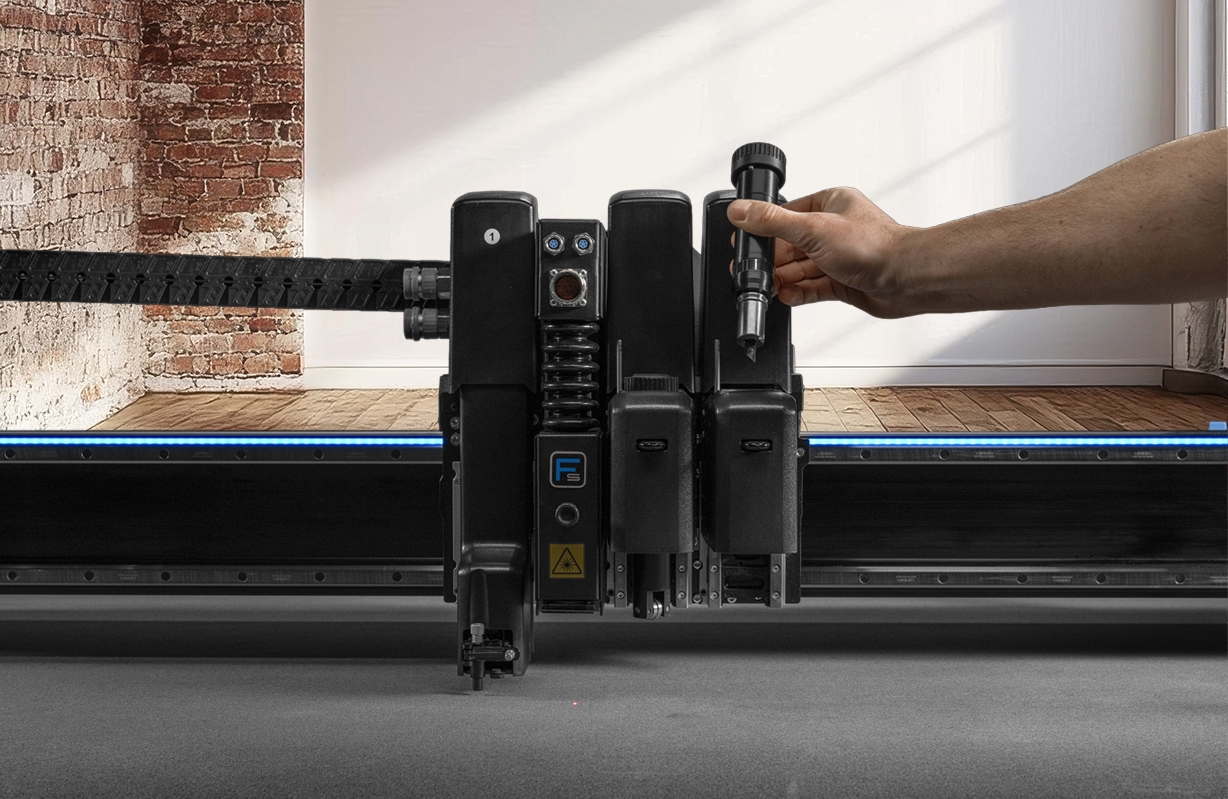
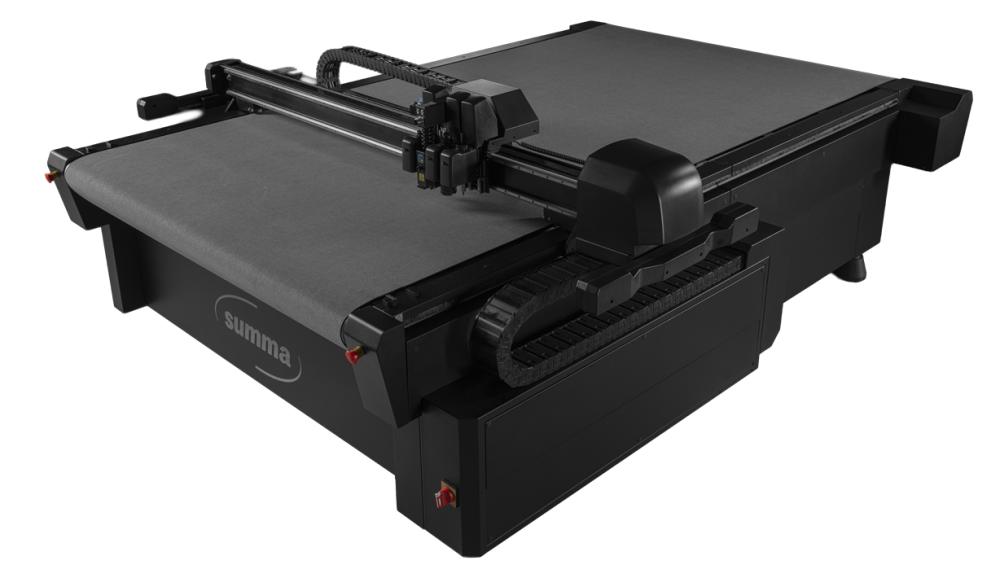
The finishing stage of production is under increasing pressure, with PSPs expected to deliver faster turnaround times, reduce errors, and maintain consistency across a wider range of materials. At FESPA Barcelona, Summa unveiled the F Series Vantage — its latest generation of flatbed cutters designed to streamline finishing workflows and improve day-to-day production efficiency.
In today’s sign and display environment, finishing is no longer a secondary process. It plays a central role in overall productivity, and increasingly determines how efficiently jobs move from print through to installation. The F Series Vantage has been developed around that shift, with a clear focus on reducing friction in production and keeping work flowing through the shop.
Summa is positioning the system as delivering up to 40% productivity gains, achieved through a combination of faster setup, improved automation and more efficient material handling. Rather than relying on a single headline feature, the emphasis is on incremental improvements across the entire workflow — from job preparation through to final cut.
The platform also introduces an expanded tooling ecosystem, designed to support a wider range of applications including more demanding rigid materials. Alongside this, new automation features aim to reduce manual intervention, helping to minimise errors and keep production running consistently.
Speaking at launch, Managing Director Geert Pierloot highlighted the pressures many PSPs are facing, from rising operational costs to labour constraints, and the need to protect margins without compromising throughput. The F Series Vantage has been developed to respond to those challenges, with a focus on stability, usability and keeping production moving.
That emphasis continues through the user experience. Product Manager Randi Kerkaert noted that the system has been engineered to reduce friction at operator level, combining automation and interface design to support faster, more confident production while maintaining precision and safety standards.
Integration has also been a key priority. The F Series Vantage is designed to slot into existing production environments rather than disrupt them, allowing businesses to build on their current setup and scale at their own pace. This approach will appeal to PSPs looking to improve efficiency without overhauling established workflows.
Available in 1612 and 1625 models, the F Series Vantage is being showcased at FESPA Barcelona as part of Summa’s broader focus on more connected, efficient finishing production.
-
 Read more ...
Wide-format print has changed significantly over the last few years. For a long time, the conversation around new hardware focused heavily on print quality, but most modern systems now produce output that is more than acceptable for the majority of applications. In 2026, the real challenge for print service providers is operational efficiency.
Margins are tighter, turnaround expectations are shorter, and customers want more variation, more sustainability, and more flexibility — often within the same job. As a result, many PSPs are reassessing whether traditional eco-solvent workflows still make sense for the type of work they are producing today.
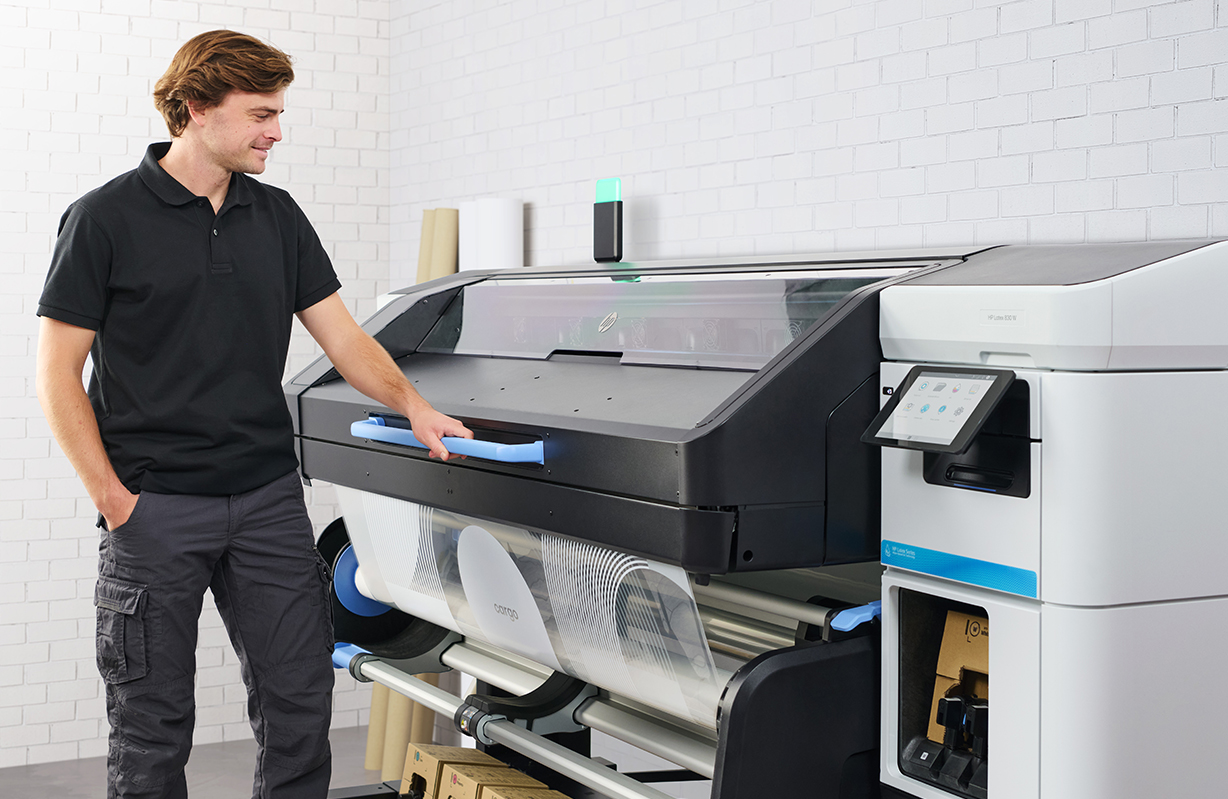
Across retail graphics, interior décor, wall coverings, POS, vehicle wraps, and branded environments, businesses are increasingly looking for production systems that help reduce delays and improve workflow from print through to finishing and installation. That shift is one of the reasons the HP Latex range — including the HP Latex 630 and 630W, alongside the 730, 730W, 830 and 830W series — is generating growing interest across the industry.
The Pressure on Modern Print Production
Most print businesses are now operating in a very different environment compared to five or ten years ago. Customers now expect shorter lead times, lower minimum order quantities, greater customisation, and consistent quality across multiple applications. At the same time, PSPs are managing rising labour costs, increasing material prices, tighter margins, and more competition than ever before.
The challenge is no longer simply producing good print — it is producing work efficiently and profitably. For many businesses, the biggest operational issues are the bottlenecks that slow production down, including prints waiting to cure, jobs delayed before lamination, reprints caused by inconsistency, maintenance interruptions, and finishing departments waiting on output.
Over the course of a week, those small delays can have a significant impact on productivity and profitability. That is where latex technology has become increasingly attractive, particularly for businesses focused on fast-turnaround work where keeping production moving matters just as much as image quality itself.
Why Workflow Is Becoming More Important Than Print Specs
A lot of the discussion around new printers still focuses on speed and resolution, but many PSPs are paying closer attention to overall workflow efficiency. If jobs can move directly from printing into finishing without long drying or outgassing times, production becomes easier to manage, installation deadlines become less stressful, and teams spend less time managing queues between departments.
For higher-volume environments, that can make a substantial difference to throughput. The HP Latex 730 and 830 series — including the white ink-enabled 730W and 830W models — are clearly designed with this type of production environment in mind. The emphasis is less about headline specifications and more about helping print businesses maintain consistent output across multiple applications while reducing production friction across the wider workflow.
That becomes particularly important for PSPs handling retail rollouts, campaign graphics, vehicle wraps, short-run promotional work, and interior décor projects where turnaround speed is often just as important as print quality. In many cases, clients are not simply buying print — they are buying reliability, flexibility, and delivery speed.
The Growing Demand for More Versatile Print Applications
Another noticeable shift within the market is the move away from purely commodity print work. Many PSPs are actively trying to diversify into applications that offer stronger margins and more repeat business rather than competing solely on banner pricing or high-volume low-margin production.
This includes areas such as premium wall coverings, window manifestations, retail décor, short-run campaign graphics, vehicle wraps, and white ink applications. These markets typically require greater flexibility from production equipment, but they also create opportunities for print businesses to differentiate themselves and move into more profitable sectors.
This is where the HP Latex 630W has found a particularly strong position in the market. For smaller or growing PSPs, white ink has traditionally meant investing in larger and more complex production equipment. The 630W gives businesses access to those higher-value applications without requiring a major change to their production setup or floor space.
For businesses looking to scale further, the 730W and 830W models extend those capabilities into higher-volume production environments while maintaining the same focus on workflow efficiency and application versatility.
Sustainability Is No Longer Just a Marketing Topic
Sustainability has also become a far more practical commercial consideration for PSPs. A few years ago, environmental messaging was often treated primarily as a branding exercise, but it now increasingly forms part of procurement discussions, particularly for retail brands, corporate interiors, hospitality groups, healthcare environments, and public sector projects.
Questions around indoor suitability, odour levels, environmental standards, and ink technology are becoming more common during supplier selection. In some sectors, those conversations are now expected rather than optional, especially for applications installed in customer-facing or enclosed indoor environments.
Water-based HP Latex inks help address many of those concerns while also supporting applications where indoor air quality and installation conditions matter. For PSPs serving these sectors, that is becoming an important advantage commercially as well as operationally.
Where the Industry Is Heading
The print businesses growing successfully in 2026 are not always the largest operations. In many cases, they are the companies that can adapt quickly, handle diverse applications efficiently, reduce production bottlenecks, keep turnaround times tight, and maintain consistent output across a wide range of work.
That is ultimately where the HP Latex 630, 630W, 730, 730W, 830 and 830W portfolio fits into the market. Each system is designed for different production environments, but all focus on the same priorities modern PSPs are dealing with every day — faster turnaround, greater application flexibility, simpler workflows, and more efficient production.
For most print businesses today, profitability is no longer determined purely by how well a printer prints. Increasingly, it comes down to how efficiently the entire operation runs from production through to finishing and installation.
-
 Read more ...
PSW Paper & Print Limited is pleased to announce its appointment as an authorised service and repair centre for Summa roll-fed cutting systems across the UK. This latest accreditation builds on PSW’s earlier achievement in 2026 of becoming an authorised service partner for the Summa F Series flatbed cutters, further reinforcing the company’s commitment to delivering comprehensive, manufacturer-approved support across the full range of Summa cutting solutions.
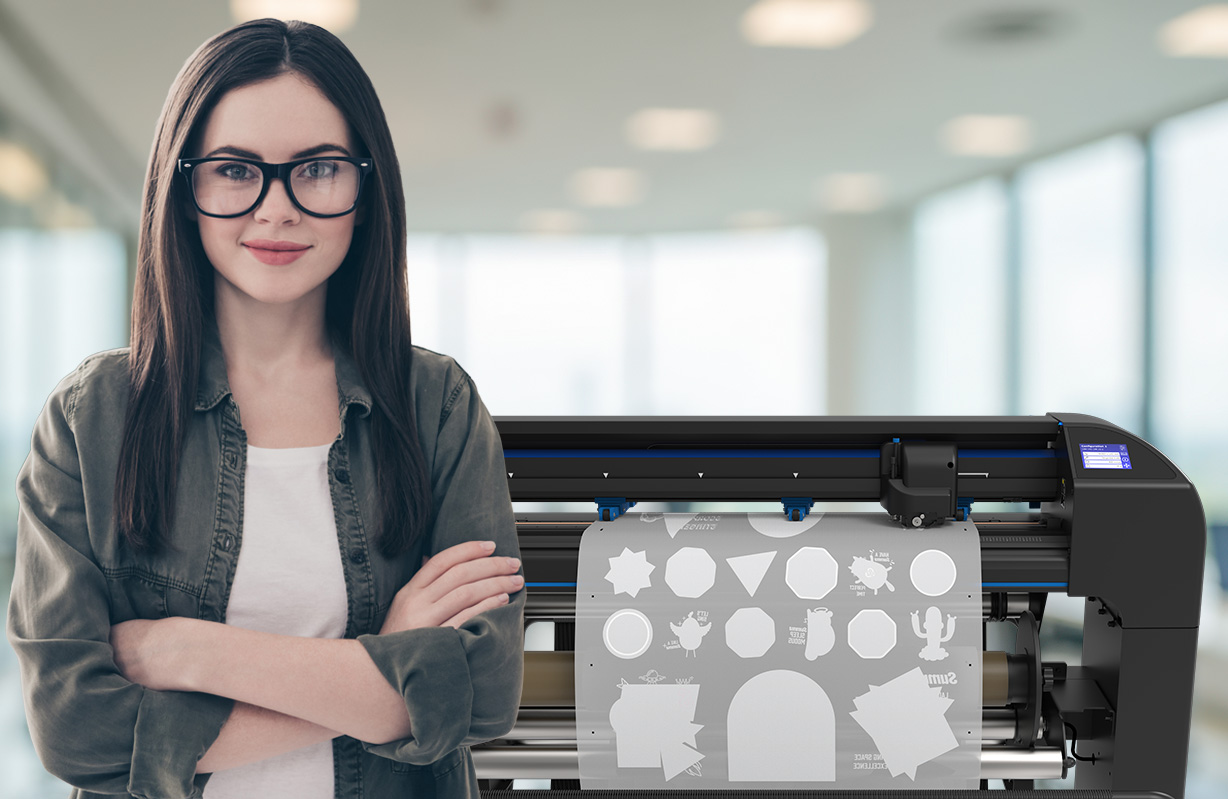
Summa’s roll-fed cutters, including the widely adopted S Class 3 and S One Series, are globally recognised for their precision contour cutting, reliability, and efficiency across applications such as signage, decals, labels, vehicle graphics, and wide-format print finishing. Designed to meet the demands of high-performance production environments, these systems play a critical role in maintaining fast turnaround times and consistent output quality.
As an authorised service partner, PSW is fully equipped to support the ongoing performance and longevity of Summa roll-fed systems. For businesses and service providers operating in time-sensitive production environments, even minimal downtime can have significant operational impact. This accreditation ensures access to accredited expertise, rapid response, and dependable aftercare.
PSW’s engineers are formally trained and approved by Summa to carry out diagnostics, preventative maintenance, repairs, firmware updates, and component replacement in line with manufacturer standards. With direct access to genuine parts and up-to-date technical knowledge, customers can be confident their equipment is maintained to the highest possible standard.
In addition to reactive support, PSW continues to promote a proactive service model. Through scheduled maintenance programmes, system health checks, and performance optimisation, customers and service providers can minimise unexpected failures, extend equipment lifespan, and maintain optimal cutting accuracy. This approach is particularly valuable for service providers responsible for supporting multiple client systems where uptime and reliability are paramount.
Benefits for Summa Roll-Fed Customers
- Authorised Expertise: Summa-accredited engineers with specialist knowledge of S Class 3 and S One Series cutters.
- Fast, Reliable Support: Responsive service to minimise downtime and maintain production continuity.
- Genuine Parts & Approved Procedures: Manufacturer-backed servicing to protect performance and warranty compliance.
- Extended Equipment Lifespan: Proactive maintenance to ensure long-term reliability and cutting precision.
- Support for Service Providers: Dedicated expertise to help partners deliver dependable support to their own customers.
- UK-Based Service Support: Reliable coverage across key regions with a strong, responsive service network.
“Following our authorisation for the Summa F Series earlier this year, achieving authorised status for Summa’s roll-fed range is another significant milestone for PSW,” said Tom Skinner, Sales Director at PSW Paper & Print Limited. “It strengthens our ability to support both end users and service providers with a complete, manufacturer-approved service offering. Our focus remains on delivering fast, reliable support that keeps production running and enables our partners to deliver the same high standards to their customers.”
This latest appointment further reinforces PSW’s position as a trusted technical partner within the UK print and finishing industry. With authorised support now covering both flatbed and roll-fed Summa systems, including the S Class 3 and S One Series, PSW continues to invest in the expertise and infrastructure required to meet the evolving needs of modern production environments and the service providers who support them.
For service enquiries, maintenance support, or more information, visit www.psw.co.uk.
-
 Read more ...
For Printrade, a fast-growing Australian trade printer specialising in high-end wall coverings, stickers, and posters, production speed and quality are critical. As demand for peel-and-stick wallpapers and sheet stickers increased, their existing equipment became a bottleneck. To stay ahead, Printrade turned to Summa and its innovative S Class 3 roll cutter with tangential knife technology.
Trade-only large format and flatbed printing
Printrade is a fast-growing Australian trade printer, rebranded in 2022 from Complete Graphics. The company specialises in high-end large-format printing for resellers, with a strong focus on the home décor market, including peel-and-stick wallpapers, wall coverings, and premium sheet stickers. With a compact team of five, Printrade delivers reliable quality and fast turnaround, making it a trusted partner for resellers seeking more than just standard print.
To ensure consistent quality and minimal downtime, Printrade needs to invest in premium, industrial-grade equipment from global leaders. Every machine is selected for speed, precision, and reliability at scale.
The challenge: bottleneck for increasing volumes
For example, cutting a single roll of thick peel-and-stick wallpaper stickers could take as long as five to six hours. On top of that, the cutting process often produced inconsistent results, which meant extra testing and sometimes even reprints.
A key requirement to switch to Summa was to gain the ability to keep pace with Printrade’s Canon Colorado printers, creating workflow bottlenecks. To continue growing, Printrade needed a cutting solution that combined speed, cleaner cuts, and seamless integration with its printers to unlock higher throughput.
The solution: Summa S Class 3 with tangential knife technology
In 2024, Printrade turned to Pozitive, Summa’s Australian reseller, and invested in two Summa S Class 3 160 TC cutters equipped with tangential knife technology.
“The reason why I went with Summa is the tangential knife,” says Paul Ilieski, owner of Printrade. “As we often have to cut thicker materials, this technology helps us achieve a cleaner cut. It offers more efficient, better quality, and more throughput.”
The cutters immediately proved their value: smart sorting and paneling allow cutting speeds up to 50 percent faster, while the tangential knife delivers cleaner cuts and extends blade life for consistent output. Operators appreciate the high usability, with intuitive controls and minimal setup required. At the same time, the machines integrate seamlessly with Printrade’s printers and Caldera RIP software, keeping the workflow smooth and bottleneck-free.
The impact: faster turnaround and seamless workflow
Since adopting the Summa S Class 3 cutters, Printrade has achieved:
- Higher throughput: Cutting times reduced from 5–6 hours to just 3 hours per roll. Printrade can now cut and deliver up to eight rolls of peel-and-stick wallpaper per day, compared to just two before.
- No more bottlenecks: The cutters keep pace with the printers, ensuring an uninterrupted workflow.
- Cleaner, more consistent cuts: Tangential knife technology eliminates reprints and cutting issues.
- Ease of use: Operators required just 10 minutes of training to get started.
- Business growth: Expanded capacity allows Printrade to serve a growing customer base and boost customer satisfaction.
“Now there’s no bottleneck at all,” says Paul Ilieski. “The printers and Summa’s S3 cutters work hand-in-hand. We can comfortably take on more jobs without delays. It’s safe to say that the cutters have paid themselves off very quickly.”
Looking Forward
Printrade is committed to sticking with Summa for its vinyl cutters and is considering future investments as volumes continue to increase. With the S3’s unmatched combination of speed, precision, and ease of use, Printrade has positioned itself as a reliable partner for high-end trade printing in Australia.
-
 Read more ...
PSW Paper & Print Limited is proud to announce its appointment as an authorised service and repair centre for the Summa F Series flatbed cutters across the UK. This important accreditation further strengthens PSW’s commitment to delivering expert technical support, fast response times, and dependable aftercare for customers operating mission-critical cutting systems in demanding production environments.
Summa is a globally respected manufacturer of high-performance flatbed cutting solutions, with the F Series widely recognised for its precision, versatility, and reliability across signage, packaging, display graphics, textiles, and industrial applications. Designed to handle a broad range of materials — from rigid boards and foam to vinyl, acrylics, and composite substrates — the F Series has become a cornerstone of modern finishing departments where accuracy and consistency are essential.
As an authorised service and repair centre, PSW is fully equipped to support the ongoing performance and longevity of Summa F Series systems, ensuring customers achieve maximum uptime and maximum return on investment. In production environments where even short periods of downtime can disrupt schedules and impact revenue, access to accredited technical expertise provides invaluable peace of mind.
By achieving authorised status, PSW’s service engineers are formally trained and approved to carry out diagnostics, preventative maintenance, repairs, firmware updates, and part replacements in line with Summa’s exacting standards. This gives UK customers confidence that their equipment is being serviced by specialists with direct manufacturer backing, up-to-date technical insight, and access to genuine components.
In addition to reactive support, PSW’s authorised status enables a more proactive service approach. Through scheduled maintenance visits, system health checks, and performance optimisation, customers can minimise unexpected breakdowns and extend the operational life of their equipment. This preventative focus not only safeguards production output but also protects long-term capital investment.
Benefits for Summa F Series Customers
- Authorised Expertise: Summa-accredited engineers with specialist knowledge of Summa F Series flatbed cutters.
- Fast, Reliable Support: Reduced downtime through responsive on-site service, remote diagnostics where appropriate, and efficient fault resolution.
- Genuine Parts & Approved Procedures: Repairs carried out using authorised components and manufacturer-approved methods to maintain machine integrity and warranty compliance.
- Extended Equipment Lifespan: Proactive maintenance and professional servicing to protect cutting accuracy, consistency, and long-term performance.
- UK-Based Service Partner: Local, nationwide support from a trusted provider with a strong reputation in print and finishing technology.
“Becoming an authorised service and repair centre for the Summa F Series is a significant achievement for PSW,” said Tom Skinner, Sales Director at PSW Paper & Print Limited. “It reflects the strength of our technical expertise and our ongoing commitment to supporting customers with reliable, manufacturer-approved service that keeps their production running smoothly. Our goal is always to ensure customers can focus on delivering for their own clients, knowing their equipment is supported by specialists.”
This appointment further reinforces PSW’s position as a trusted technical partner for UK businesses relying on advanced cutting and finishing solutions. As production technologies continue to evolve, the need for knowledgeable, responsive service support becomes increasingly critical. With authorised support across much of the UK, Summa F Series users can operate with confidence, knowing expert assistance is never far away.
For service enquiries, maintenance support, or more information, visit www.psw.co.uk.