





Monthly Archives: May 2026
-
 Read more ...
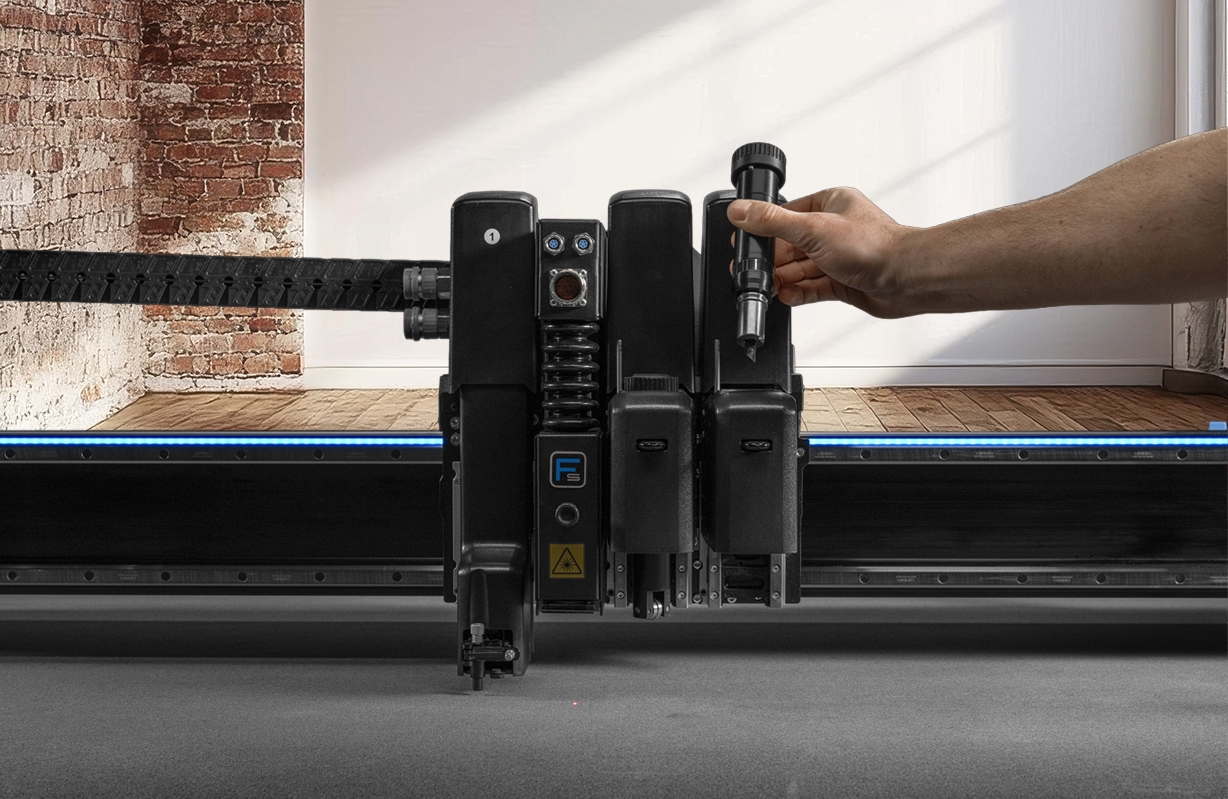
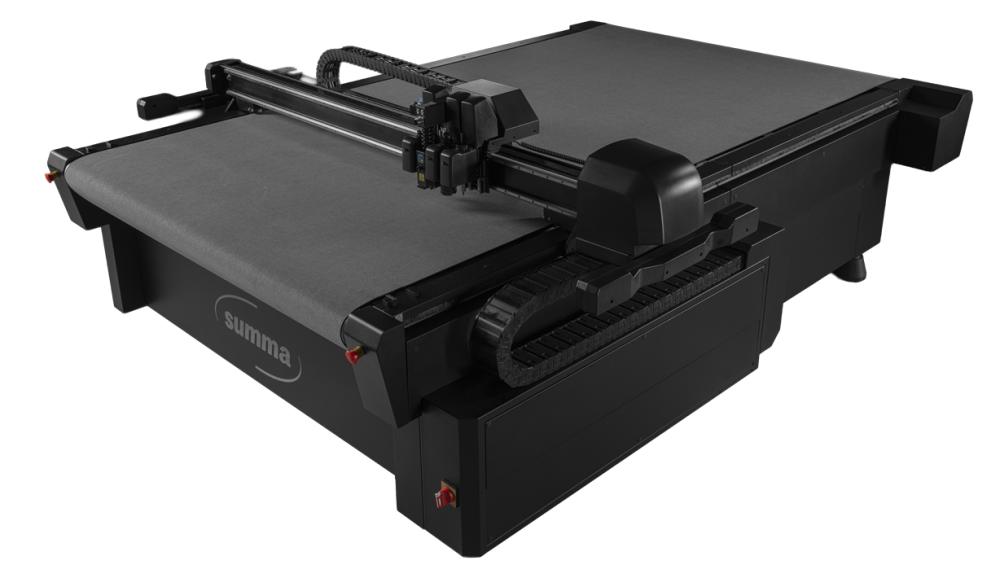
The finishing stage of production is under increasing pressure, with PSPs expected to deliver faster turnaround times, reduce errors, and maintain consistency across a wider range of materials. At FESPA Barcelona, Summa unveiled the F Series Vantage — its latest generation of flatbed cutters designed to streamline finishing workflows and improve day-to-day production efficiency.
In today’s sign and display environment, finishing is no longer a secondary process. It plays a central role in overall productivity, and increasingly determines how efficiently jobs move from print through to installation. The F Series Vantage has been developed around that shift, with a clear focus on reducing friction in production and keeping work flowing through the shop.
Summa is positioning the system as delivering up to 40% productivity gains, achieved through a combination of faster setup, improved automation and more efficient material handling. Rather than relying on a single headline feature, the emphasis is on incremental improvements across the entire workflow — from job preparation through to final cut.
The platform also introduces an expanded tooling ecosystem, designed to support a wider range of applications including more demanding rigid materials. Alongside this, new automation features aim to reduce manual intervention, helping to minimise errors and keep production running consistently.
Speaking at launch, Managing Director Geert Pierloot highlighted the pressures many PSPs are facing, from rising operational costs to labour constraints, and the need to protect margins without compromising throughput. The F Series Vantage has been developed to respond to those challenges, with a focus on stability, usability and keeping production moving.
That emphasis continues through the user experience. Product Manager Randi Kerkaert noted that the system has been engineered to reduce friction at operator level, combining automation and interface design to support faster, more confident production while maintaining precision and safety standards.
Integration has also been a key priority. The F Series Vantage is designed to slot into existing production environments rather than disrupt them, allowing businesses to build on their current setup and scale at their own pace. This approach will appeal to PSPs looking to improve efficiency without overhauling established workflows.
Available in 1612 and 1625 models, the F Series Vantage is being showcased at FESPA Barcelona as part of Summa’s broader focus on more connected, efficient finishing production.
-
 Read more ...
Wide-format print has changed significantly over the last few years. For a long time, the conversation around new hardware focused heavily on print quality, but most modern systems now produce output that is more than acceptable for the majority of applications. In 2026, the real challenge for print service providers is operational efficiency.
Margins are tighter, turnaround expectations are shorter, and customers want more variation, more sustainability, and more flexibility — often within the same job. As a result, many PSPs are reassessing whether traditional eco-solvent workflows still make sense for the type of work they are producing today.
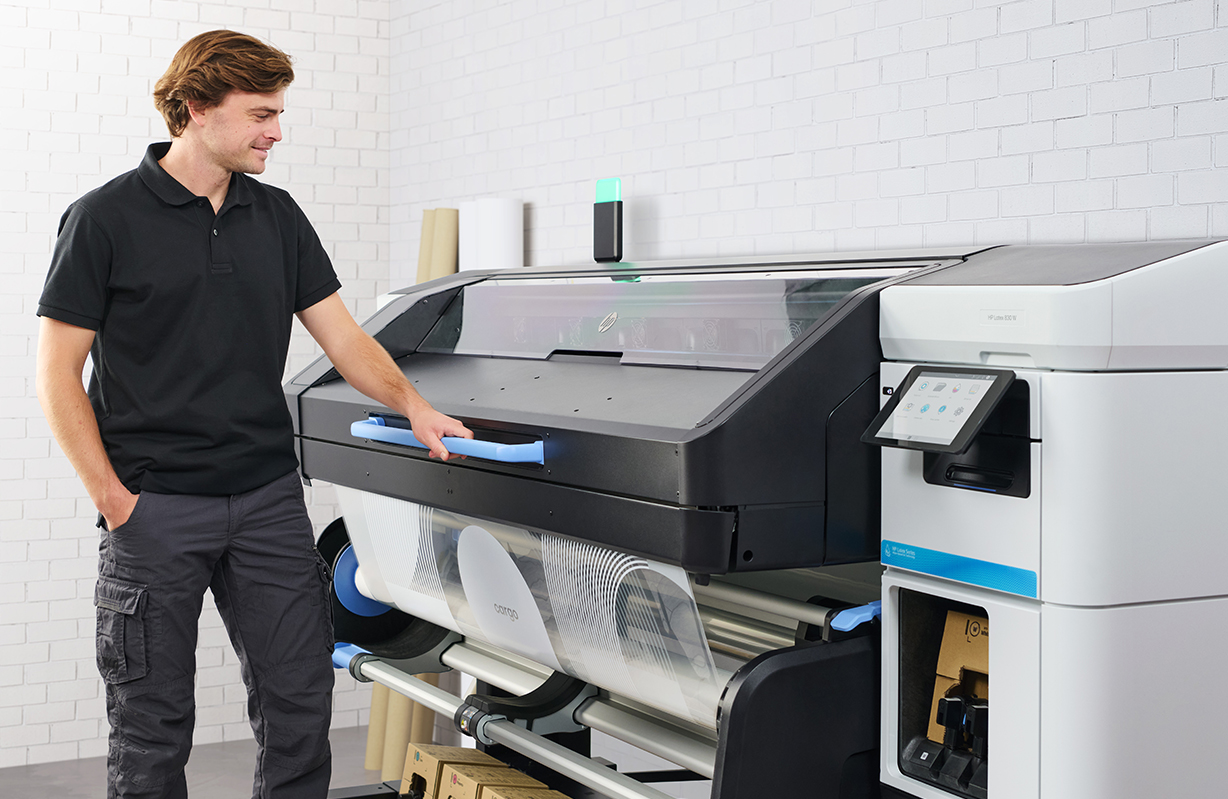
Across retail graphics, interior décor, wall coverings, POS, vehicle wraps, and branded environments, businesses are increasingly looking for production systems that help reduce delays and improve workflow from print through to finishing and installation. That shift is one of the reasons the HP Latex range — including the HP Latex 630 and 630W, alongside the 730, 730W, 830 and 830W series — is generating growing interest across the industry.
The Pressure on Modern Print Production
Most print businesses are now operating in a very different environment compared to five or ten years ago. Customers now expect shorter lead times, lower minimum order quantities, greater customisation, and consistent quality across multiple applications. At the same time, PSPs are managing rising labour costs, increasing material prices, tighter margins, and more competition than ever before.
The challenge is no longer simply producing good print — it is producing work efficiently and profitably. For many businesses, the biggest operational issues are the bottlenecks that slow production down, including prints waiting to cure, jobs delayed before lamination, reprints caused by inconsistency, maintenance interruptions, and finishing departments waiting on output.
Over the course of a week, those small delays can have a significant impact on productivity and profitability. That is where latex technology has become increasingly attractive, particularly for businesses focused on fast-turnaround work where keeping production moving matters just as much as image quality itself.
Why Workflow Is Becoming More Important Than Print Specs
A lot of the discussion around new printers still focuses on speed and resolution, but many PSPs are paying closer attention to overall workflow efficiency. If jobs can move directly from printing into finishing without long drying or outgassing times, production becomes easier to manage, installation deadlines become less stressful, and teams spend less time managing queues between departments.
For higher-volume environments, that can make a substantial difference to throughput. The HP Latex 730 and 830 series — including the white ink-enabled 730W and 830W models — are clearly designed with this type of production environment in mind. The emphasis is less about headline specifications and more about helping print businesses maintain consistent output across multiple applications while reducing production friction across the wider workflow.
That becomes particularly important for PSPs handling retail rollouts, campaign graphics, vehicle wraps, short-run promotional work, and interior décor projects where turnaround speed is often just as important as print quality. In many cases, clients are not simply buying print — they are buying reliability, flexibility, and delivery speed.
The Growing Demand for More Versatile Print Applications
Another noticeable shift within the market is the move away from purely commodity print work. Many PSPs are actively trying to diversify into applications that offer stronger margins and more repeat business rather than competing solely on banner pricing or high-volume low-margin production.
This includes areas such as premium wall coverings, window manifestations, retail décor, short-run campaign graphics, vehicle wraps, and white ink applications. These markets typically require greater flexibility from production equipment, but they also create opportunities for print businesses to differentiate themselves and move into more profitable sectors.
This is where the HP Latex 630W has found a particularly strong position in the market. For smaller or growing PSPs, white ink has traditionally meant investing in larger and more complex production equipment. The 630W gives businesses access to those higher-value applications without requiring a major change to their production setup or floor space.
For businesses looking to scale further, the 730W and 830W models extend those capabilities into higher-volume production environments while maintaining the same focus on workflow efficiency and application versatility.
Sustainability Is No Longer Just a Marketing Topic
Sustainability has also become a far more practical commercial consideration for PSPs. A few years ago, environmental messaging was often treated primarily as a branding exercise, but it now increasingly forms part of procurement discussions, particularly for retail brands, corporate interiors, hospitality groups, healthcare environments, and public sector projects.
Questions around indoor suitability, odour levels, environmental standards, and ink technology are becoming more common during supplier selection. In some sectors, those conversations are now expected rather than optional, especially for applications installed in customer-facing or enclosed indoor environments.
Water-based HP Latex inks help address many of those concerns while also supporting applications where indoor air quality and installation conditions matter. For PSPs serving these sectors, that is becoming an important advantage commercially as well as operationally.
Where the Industry Is Heading
The print businesses growing successfully in 2026 are not always the largest operations. In many cases, they are the companies that can adapt quickly, handle diverse applications efficiently, reduce production bottlenecks, keep turnaround times tight, and maintain consistent output across a wide range of work.
That is ultimately where the HP Latex 630, 630W, 730, 730W, 830 and 830W portfolio fits into the market. Each system is designed for different production environments, but all focus on the same priorities modern PSPs are dealing with every day — faster turnaround, greater application flexibility, simpler workflows, and more efficient production.
For most print businesses today, profitability is no longer determined purely by how well a printer prints. Increasingly, it comes down to how efficiently the entire operation runs from production through to finishing and installation.